The Republican majority in the Supreme Court, led by a chief justice who cares nothing about the ethics of the justices, in Trump v. United States, has not just placed the president above the law, they have placed him beyond the law. It is now up to the District and the Appellate Courts to call the Republican “Supremes” to their senses. They have given the president of the United States the immunity of a medieval king, “the king can do no wrong.” They have made the problem they sought to solve worse with this vague, undefined immunity.
Courts and Constitution
 Justice Sonia Sotomayor provides in her dissent all of the arguments necessary to refute the majority’s opinion. The majority’s attempts to refute her dissent are almost laughable. It is critical that no immunity for the president is included in the Constitution. There are less grounds in the Constitution for this decision and there were for Roe v. Wade. The authors of the Constitution knew about and understood immunity. Article 1 section 6 states that:
They (members of Congress) shall in all Cases, except Treason, Felony and Breach of the Peace, be privileged from Arrest during their Attendance at the Session of their respective Houses, and in going to and returning from the same; and for any Speech or Debate in either House, they shall not be questioned in any other Place.”
If the founders had wanted to grant the president immunity, they would have.
Presidential Immunity
 Many of the citations and the core of the argument are taken from Nixon v. Fitzgerald, 457 U.S. 731, 1982. It is interesting that Fitzgerald was decided 5 to 4 (while Roe v. Wade we decided 6 to 3 and the same justices decided to overthrow that), five is the minimum necessary and is considered a weak majority. Of the five in the majority in Fitzgerald, Chief Justice Burger wrote a separate concurring opinion to ensure that it was understood that the decision did not apply to criminal prosecution. He clearly would not be in the majority in this decision. The four in the dissent were insistent that the president should not be protected by immunity from deliberately injuring American citizens, and even civil lawsuits in those cases should be allowed, and, of course, alone criminal prosecutions.
It will now be up to the district and appellate courts to define the broad categories of presidential official acts created by the majority, including the “outer perimeter”, that have been declared immune from criminal prosecution. At best, they will find that no criminal act can possibly be an official act. At minimum, they can find that declaring the 2020 election to be stolen when he knew, he was told so by many attorneys including Attorney General Barr, it was not, and the president has no role in the states’ selection of their members of the Electoral College. Inciting people to attack Congress is not an official act, not a valid use of the “bully pulpit’. Neither was his request to “find” additional votes. If Mr. Trump had simply been asking state officials to ensure that the vote count was accurate, while I do not think that it would be an official act since voter fraud is a state not a federal responsibility, that would not be criminal.
Legal Fraud?
 Asking them to “find” enough votes for him to win when they do not exist is certainly not an official act and may be an act of attempted fraud. Telling the Vice president to do what he has no legal authority to do would not be an official act, not even within the outer perimeter, since it has to do with the Vice president’s role as president of the Senate not as the president’s assistant, and therefore not immune.
Government officials and institutions have long had “sovereign immunity.” That is immunity from civil suits to obtain damages for the actions of government, government officials and employees. It does not include immunity for criminal acts and never has. The majority thank that the danger of criminal prosecutions “is akin to, indeed greater than, what led us to recognize absolute presidential immunity from civil damages liability” in Fitzgerald – that the president would be chilled from taking the “bold and unhesitating action” (p. 13) required of an independent Executive. They also claim to be afraid that being subject to criminal prosecution would discourage presidents from “energetic, vigorous, decisive, and speedy execution of the laws.” (p. 10)
President or King?
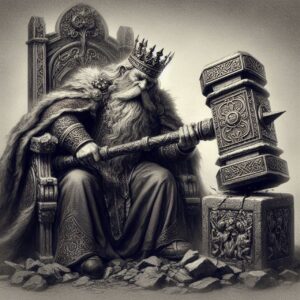 Creating this new immunity for official acts including the outer perimeter of official acts can only make presidents more hesitant to act not less. The criminal laws are well-known. Presidents can seek advice from the Attorney General, White House counsel, and their own personal attorneys about what the criminal laws are and whether an action they want to undertake would break them. They cannot get the same advice about what are official acts, especially in the outer perimeter, from anyone because they are not defined. They are unknown.
The majority attempts to offer examples which may be helpful but are clearly incomplete. Any definitions developed by the district and appellate courts in this case will not be complete and will not solve the problem. And they beg the question of why any criminal act by any citizen of the United States including the president, especially a felony, could possibly be an official act.
Moving Forward
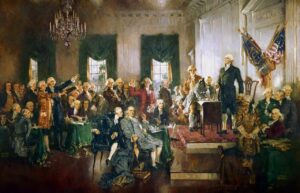 We threw off the shackles of the king in 1776 and made that good when we won the Revolutionary War. The six Republican justices in the majority in this case should be ashamed of themselves for placing the president of the United States not just above the law, but beyond the law. S/he has great responsibilities but is still just a citizen of the United States and is an employee of the citizens of the United States.
As soon as this case comes back to the Supreme Court, the justices must reverse this decision. If they will not, then the definitions of official acts and their outer perimeter must be extremely narrowly defined. The federal district and appellate courts must lead in protecting us from the criminal acts of any president in this made-up unsupportable decision by the Republican majority.